Quinn Baumann · 26 September 2026
The Unexpected Influence of Geological Layering Patterns on Predictive Inventory Systems in Multi-Industry Supply Networks
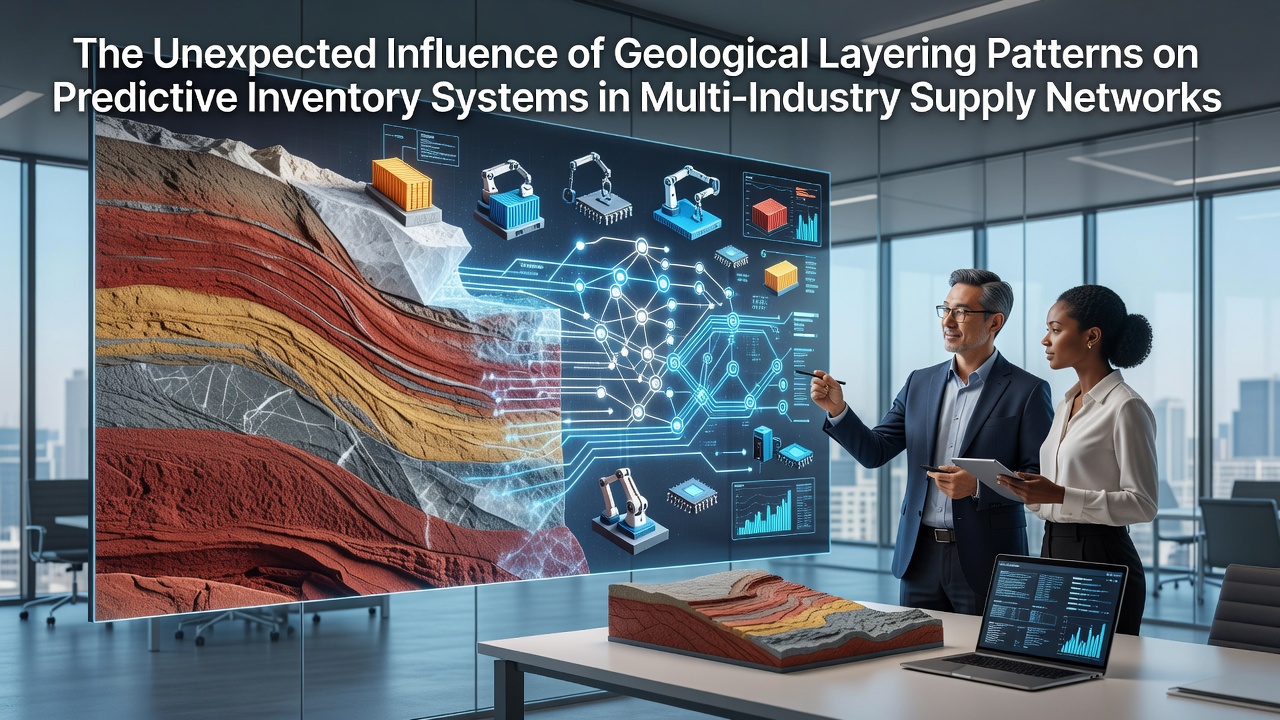
Geological layering patterns, formed over millions of years through sedimentation and tectonic shifts, have begun to inform the structure of predictive inventory systems that span multiple industries and global supply networks, and researchers continue to map these connections in detail. Stratigraphic analysis techniques originally developed for oil exploration and mineral prospecting now guide algorithms that forecast stock levels across manufacturing, logistics, and retail sectors where demand fluctuates in layered patterns similar to rock formations. Data from the United States Geological Survey shows how sequential rock layers correlate with historical resource extraction rates, and those same sequential models help supply chain analysts segment inventory data into strata that reflect seasonal, regional, and industry-specific variables.
Stratigraphic Principles Applied to Inventory Forecasting
Layering in geological records follows predictable sequences of deposition, erosion, and compaction, while predictive inventory models use comparable layering to separate variables such as supplier lead times, warehouse capacities, and consumer demand cycles. Studies published by the Geological Society of London demonstrate that cross-bedding patterns in sandstone formations mirror the cross-industry dependencies seen when automotive parts shortages affect electronics assembly lines, and analysts apply these analogies to build multi-tier forecasting engines. The approach segments inventory buffers into distinct horizons, each representing a different temporal or industrial layer, so that disruptions in one stratum do not cascade unchecked into others. Canadian researchers at Natural Resources Canada have documented how glacial till layers provide natural analogs for buffer stock calculations in perishable goods networks, where temperature and time gradients create similar stratification effects.
Multi-Industry Network Integration
Supply networks that connect mining, agriculture, pharmaceuticals, and consumer electronics rely on shared transportation corridors and storage facilities, and geological layering concepts help model the vertical integration of these flows. When a drought affects one agricultural layer, for instance, the impact registers as a distinct stratum within broader inventory projections rather than a uniform shock. European Union Horizon research programs have funded projects that adapt seismic tomography methods to scan digital supply chain data for hidden fault lines between industries, and preliminary results indicate improved accuracy in identifying bottleneck strata before they surface. Observers note that this method reduces overstock in upper layers while maintaining safety margins in lower, more critical strata where raw material shortages originate.
September 2026 Developments and Ongoing Research
In September 2026 the International Association for Mathematical Geosciences plans to host a dedicated track on supply network applications at its annual meeting in Perth, Australia, where teams will present updated models that incorporate real-time satellite imagery of geological formations into live inventory dashboards. These presentations build on earlier work showing that permeability rates in aquifer layers can calibrate reorder points for fluid-dependent manufacturing processes across continents. Figures from the Australian Bureau of Statistics reveal that mining operations using stratified forecasting reduced excess inventory holdings by measurable percentages between 2023 and 2025, and similar techniques now extend to pharmaceutical cold-chain networks where temperature gradients create comparable layering challenges.
Case Examples from Global Operations
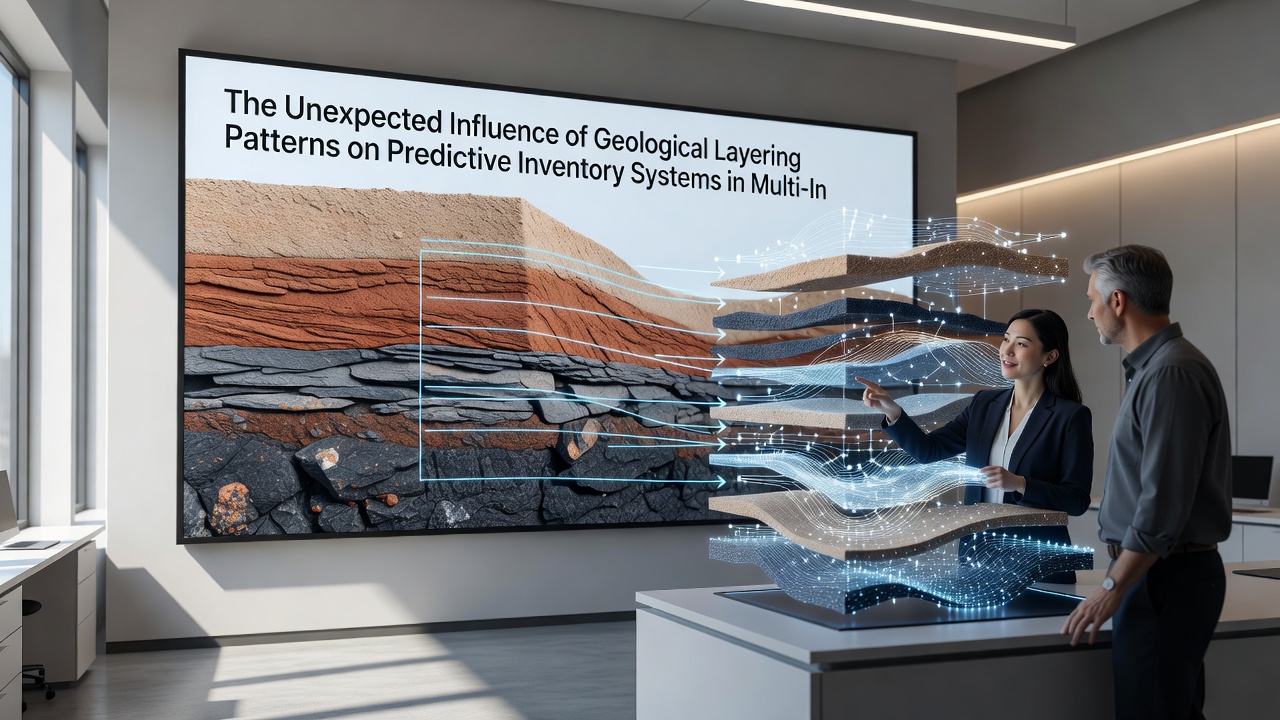
One mining company operating across South American and African sites applied geological sequence stratigraphy to its spare parts inventory, treating each equipment class as a separate depositional layer and adjusting reorder triggers according to historical wear patterns that parallel erosion rates in exposed strata. The result appears in reduced downtime statistics reported to the World Bank’s extractive industries database. Meanwhile, a European automotive consortium has tested layering algorithms on semiconductor stock across Asian and North American suppliers, where each fabrication node functions as a distinct geological horizon subject to different regulatory and capacity constraints. Data collected through these pilots shows tighter alignment between projected and actual stock levels when stratigraphic rules replace conventional linear forecasting.
Technical Mechanisms and Data Requirements
Implementation begins with the creation of digital stratigraphic columns for each supply node, populated by sensor readings, transaction logs, and external indicators such as weather or trade policy changes. Machine learning classifiers then assign new data points to existing layers or identify emerging strata when market conditions shift. Research from the University of Cape Town’s minerals processing group indicates that this layered classification improves anomaly detection rates compared with flat statistical models, particularly when rare events such as port strikes or seismic disruptions occur. Storage architectures must accommodate the added dimensionality, yet the computational overhead remains modest because each layer can be processed independently before recombination at the network level.
Conclusion
Geological layering patterns continue to supply structural templates for predictive inventory systems that operate across diverse industries and extended supply networks, with measurable adoption in mining, manufacturing, and logistics sectors. Ongoing work scheduled for September 2026 will refine these templates further as new datasets become available and cross-disciplinary teams expand the analogies into operational tools. The integration rests on documented correlations between physical stratification processes and segmented demand forecasting, supported by reports from government geological agencies and academic research programs worldwide.