Mia Krause · 12 September 2026
Mapping the Parallels Between Quarry Extraction Methods and Digital Thread Management in Contemporary Design Workflows
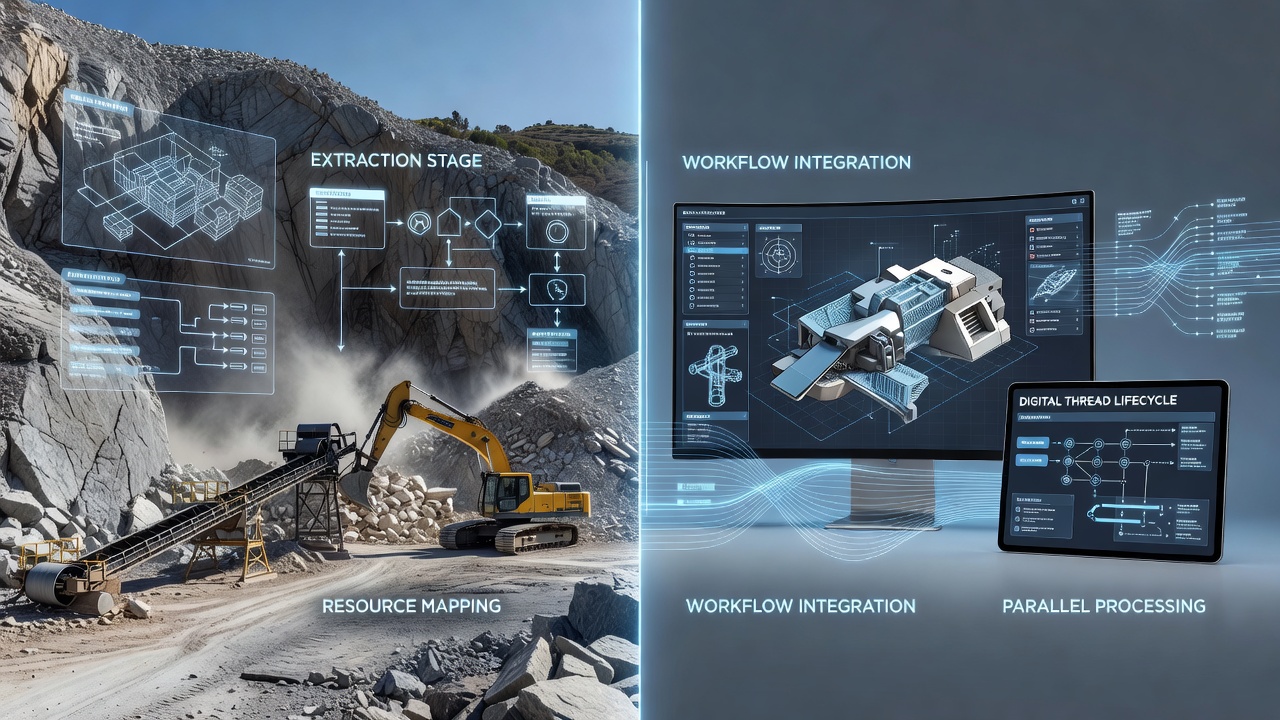
Quarry extraction methods rely on systematic planning that begins with geological surveys and resource mapping before any material leaves the ground, while digital thread management in design workflows maintains continuous data connections from initial concept through production and maintenance stages. Researchers at institutions like the Massachusetts Institute of Technology have documented how both systems prioritize sequential resource allocation and real-time monitoring to minimize waste and maximize output consistency.
Core Elements of Quarry Extraction Processes
Modern quarry operations start with topographic analysis and core sampling that feed into extraction schedules, and these steps determine drill patterns plus blast timings across sites in regions from Australia to Canada. Equipment operators then remove overburden in controlled layers before accessing valuable stone deposits, after which conveyor systems and haul trucks transport raw material to processing zones where crushers and sorters refine it according to size and quality specifications. Data from sensors on excavators and loaders track volume metrics in real time, allowing supervisors to adjust routes and machine loads as conditions change throughout the day.
Regulatory frameworks in the European Union require detailed environmental impact assessments that integrate with extraction plans, and similar documentation standards appear in North American mining codes. This creates traceable records of material origin that follow batches from quarry face to final delivery, much like audit trails in other industrial sectors.
Structure of Digital Thread Management
Digital thread systems connect design files, simulation results, and manufacturing instructions through centralized platforms that update automatically when any linked parameter shifts. Engineers working on aerospace components or automotive parts use these threads to maintain version control and propagate changes across supply chains without manual re-entry at each stage. Software from providers such as Siemens and Dassault Systèmes supports this continuity by embedding metadata tags that persist from CAD models through CNC programming and quality inspections.
According to reports from the National Institute of Standards and Technology, organizations implementing full digital threads report reductions in data loss incidents during handoffs between teams. The approach mirrors physical logistics by treating information as a resource that must move efficiently between extraction points (initial modeling) and refinement stations (prototyping and testing).
Direct Correspondences in Planning and Execution
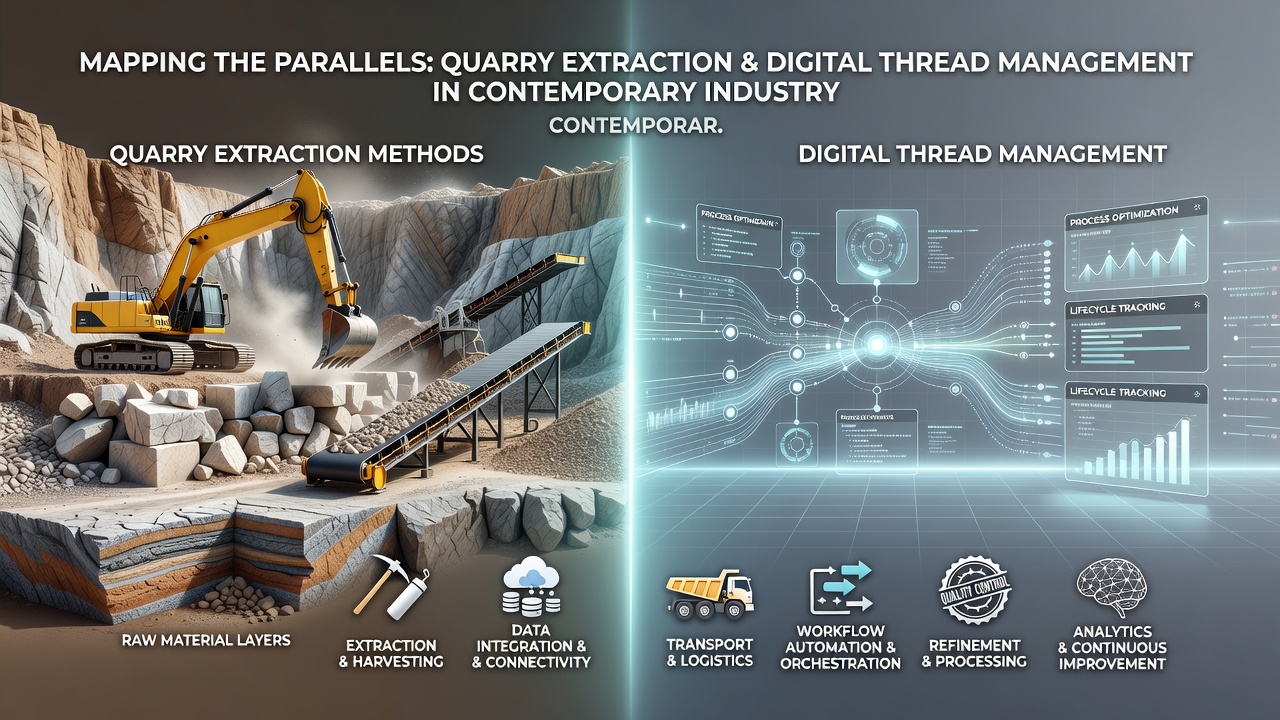
Surveying a quarry deposit for optimal extraction zones parallels the initial data capture phase in digital threads where requirements gathering and stakeholder inputs define the scope of a design project. Both processes generate layered datasets: geological strata maps correspond to hierarchical product structures that break assemblies into components and subcomponents. Adjustments made mid-extraction due to unexpected rock hardness find equivalents when simulation results force redesigns that ripple through the entire thread without disrupting downstream manufacturing schedules.
Logistics optimization in quarries uses GPS routing and load balancing algorithms that parallel the resource allocation engines within digital thread platforms, where computational tasks queue according to priority and available processing capacity. Studies from Australian mining technology centers show that sensor-driven adjustments cut fuel consumption by measurable percentages, and comparable efficiency gains appear in design environments when thread management prevents redundant simulations or file duplications.
Traceability and Quality Control Mechanisms
Each block of stone leaving a quarry carries documentation that records its extraction date, location coordinates, and processing history, creating an unbroken chain that supports certification for construction or architectural use. Digital threads replicate this by attaching persistent identifiers to every design iteration, material specification, and test result so that end users can verify compliance at any point in the product lifecycle. This shared emphasis on provenance reduces errors from misidentified components or undocumented changes.
Industry conferences scheduled for September 2026 in multiple regions plan to highlight case examples where quarry operators and design software teams exchanged methodologies for handling variable input streams. Participants expect to review metrics on how both domains manage exceptions such as equipment downtime or software integration failures through automated rerouting of tasks or material flows.
Resource Optimization Across Physical and Virtual Domains
Quarry managers apply yield calculations that balance extraction rates against equipment wear and site reclamation requirements, and design teams employ similar predictive models to allocate computing resources and personnel time across concurrent projects. When material hardness varies within a quarry bench, operators modify blast parameters on the fly, just as thread management systems detect conflicts in design constraints and trigger notifications for immediate review. Both approaches rely on feedback loops that convert raw measurements into actionable adjustments without halting overall progress.
Evidence from Canadian research initiatives on sustainable extraction demonstrates that integrated monitoring reduces overall site disturbance, while parallel findings in manufacturing literature indicate that digital thread adoption lowers scrap rates during iterative prototyping phases. The underlying principle remains consistent: treat the flow of material or data as a continuous pipeline where bottlenecks are identified and cleared through coordinated interventions.
Conclusion
The structural similarities between quarry extraction sequences and digital thread architectures stem from shared needs for sequential processing, real-time visibility, and end-to-end accountability. Organizations that recognize these overlaps continue to adapt tools and protocols across both domains, creating opportunities for cross-industry learning that focus on measurable outcomes such as reduced waste and improved traceability. As data standards evolve and sensor networks expand, the alignment between physical resource management and virtual information flows is expected to deepen through ongoing technical refinements.